Ginkgo
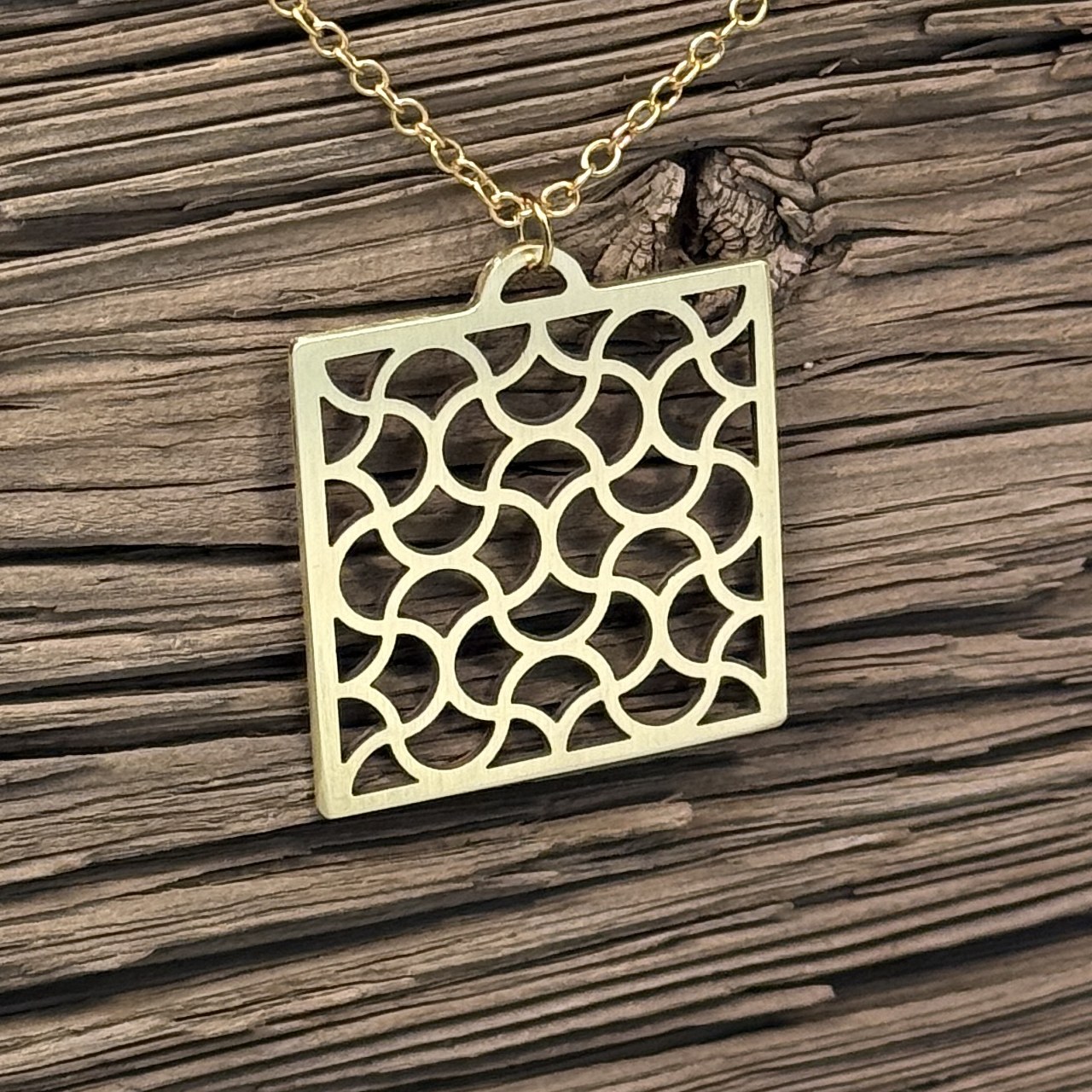
Quarter-circle fan tiles swirling into alternating pinwheels - the energetic geometry of 1920s Art Deco cement floor tile.
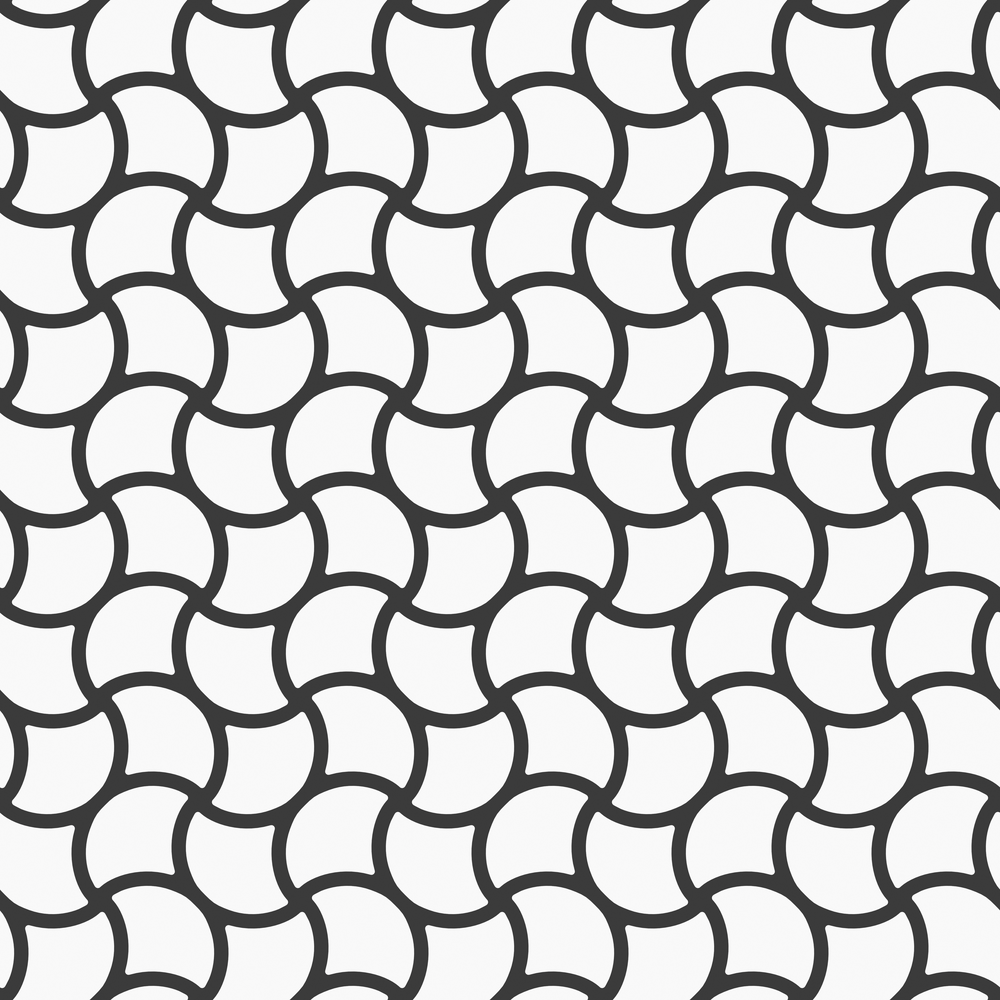
Quarter-circle fans set into a square tile and repeated so the arcs swirl into alternating pinwheels, each cluster turning against its neighbor. The eye catches it as a ginkgo leaf, but the form is geometric - a fan tile, the kind that ran in bold repeats across the cement floors of the Art Deco era.
The lineage is the patterned cement tile of the 1920s and 30s: simple arc-and-square units laid to build a restless, spinning field out of a single repeated shape. The energy comes entirely from the turn of each tile against the next.
At architectural scale the fan tile is a floor, a screen, a panel. At jewelry scale one cluster, cut from sheet metal, becomes a single piece of the larger field - the fan doing most of the work.
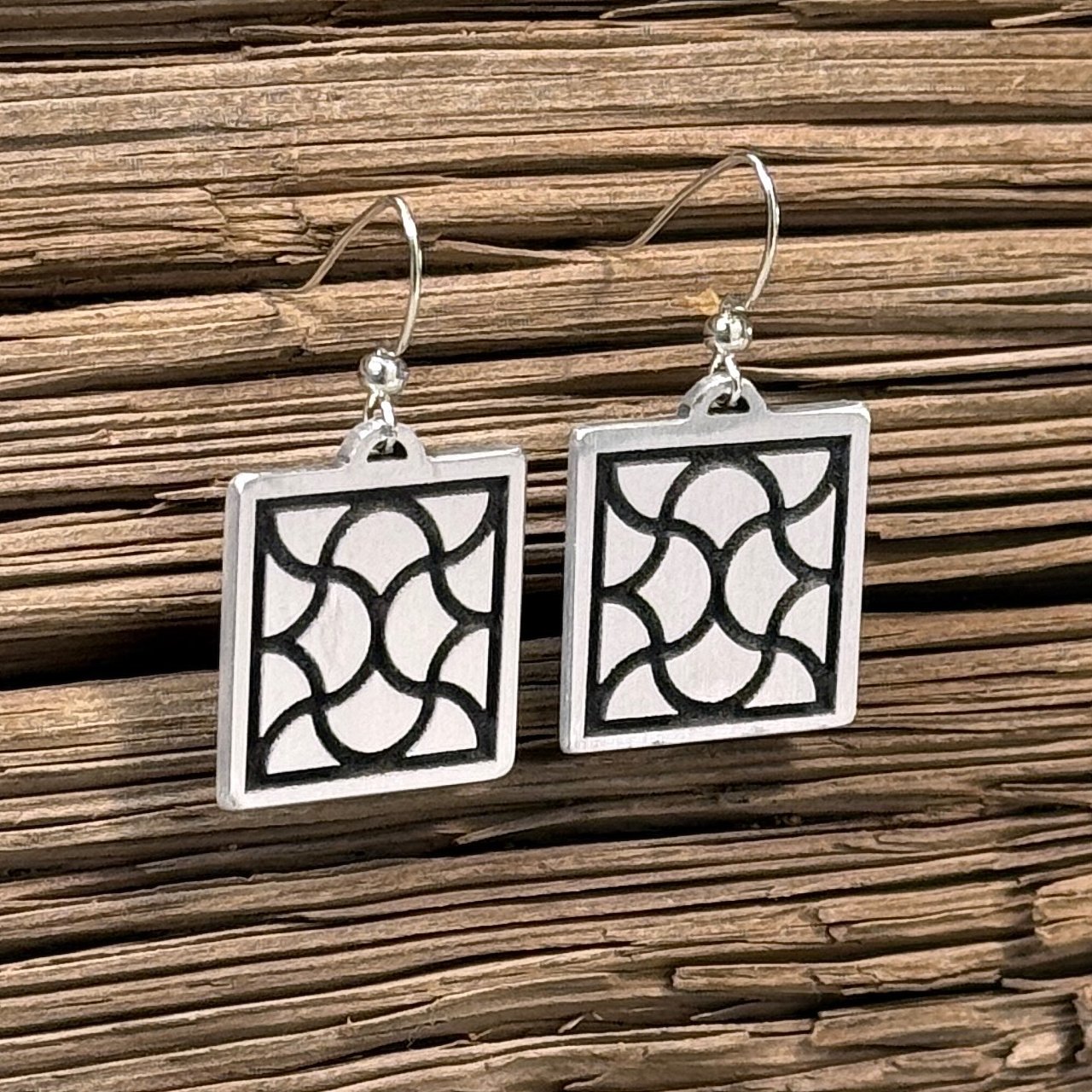
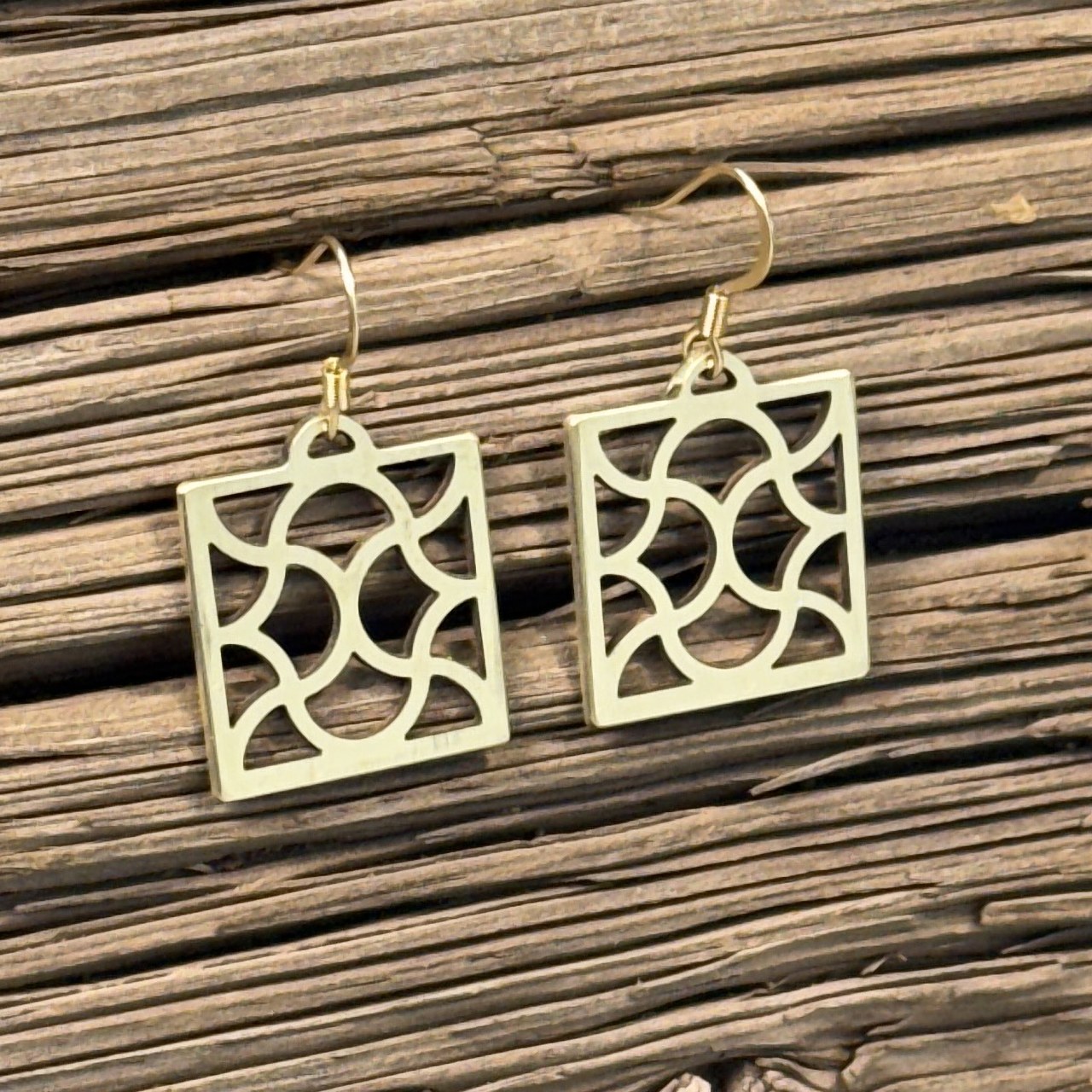
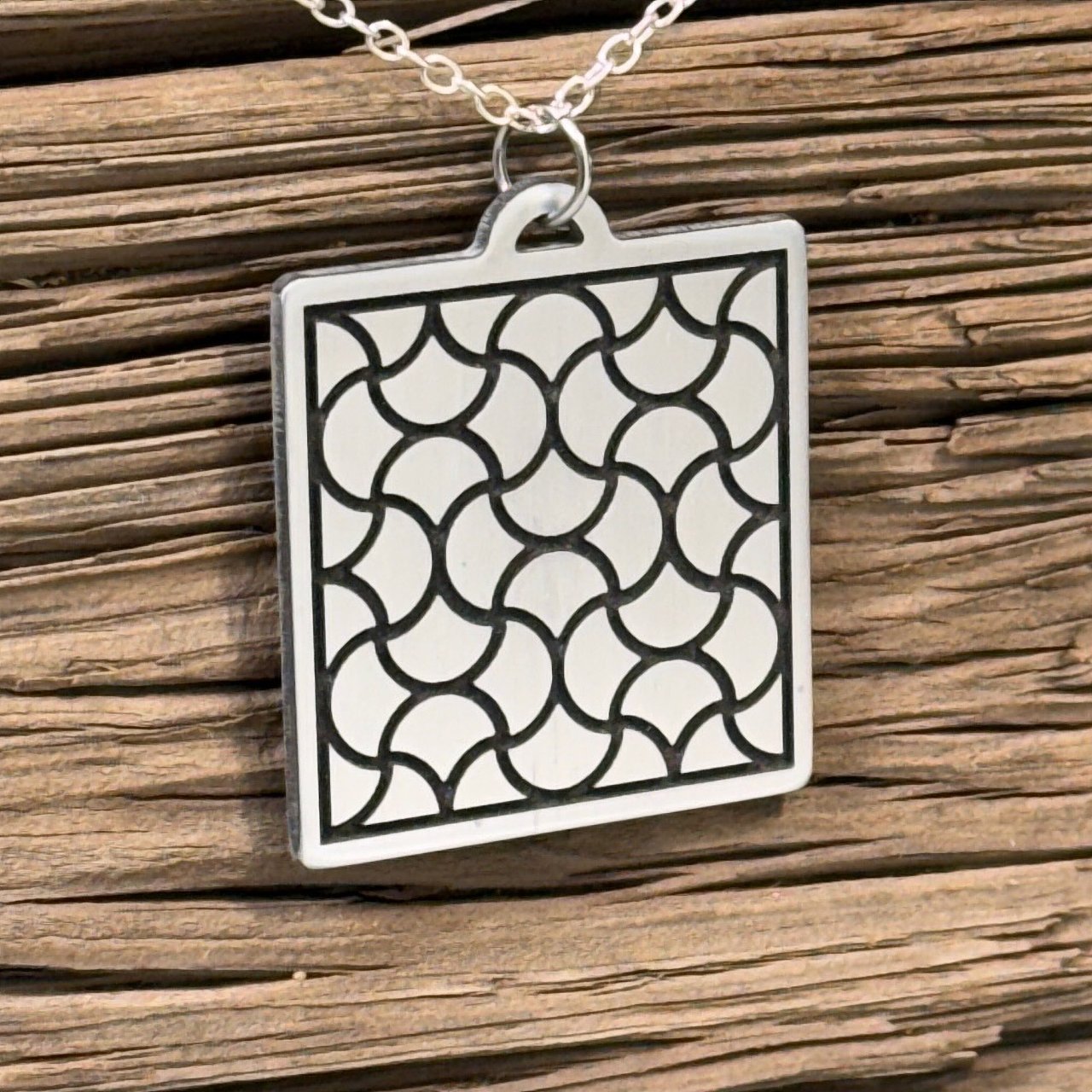
The same patience that fills a pendant fills a panel.